How it works
The four questions the lesson leaves them with
Is the person it is about laughing?
Smiling along does not count as laughing.
Would you say it to them with nobody else there?
If it only works with others listening, it was said for them.
Could they say the same thing back to you?
If the same words would not be funny said about you, it was not fair.
Did it stop the first time they asked?
Before they ask you to stop, it could be a mistake. If it carries on after they ask, it is a choice.
Something that is just a joke passes all four questions. Students work the questions out for themselves during the starter.
The lesson starts with six short moments on the board, and pairs sort each one under joke, not a joke, or cannot tell. At this stage nobody is told what to look for, so students rely on their own judgement.
Next, students look at three pairs of moments. In each pair the words are almost the same, but who was laughing, whose nickname it was, or whether it stopped is different. The four questions come from spotting those differences.
The class then looks at what the sentence “It was just a joke” is doing. It says two things at once: I did not mean to hurt you, and stop talking about it. The first half is often true, and would be a fine apology on its own. Students then write what they would say instead, once as the person who said it and once as the person it was about. Another student marks each sheet against three questions.
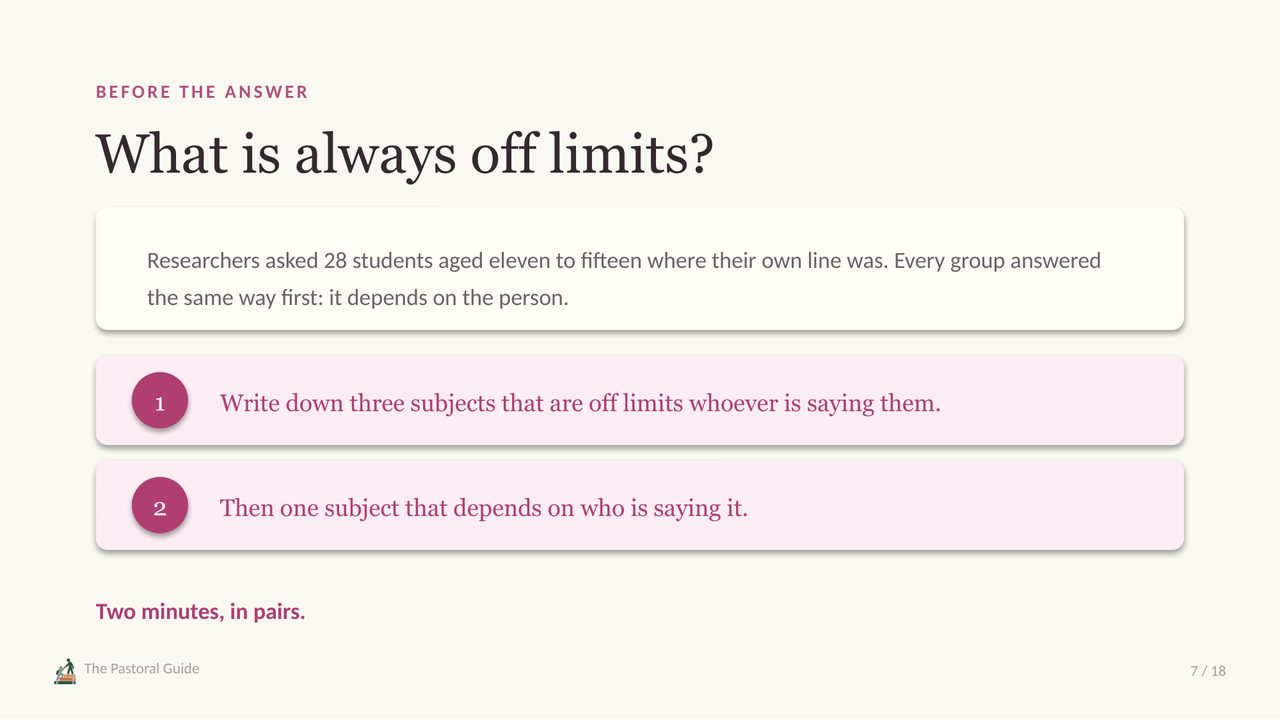
This lesson may be close to something happening in your form. Do not use a real incident or a real name, and do not run the lesson the day after an incident. One slide lists topics that students in the research said are off limits, including someone who has died, so check beforehand whether that might affect anyone in your form. Nothing students write is collected or read out, and the deck says so before anybody writes anything.
A look inside
Get the lesson
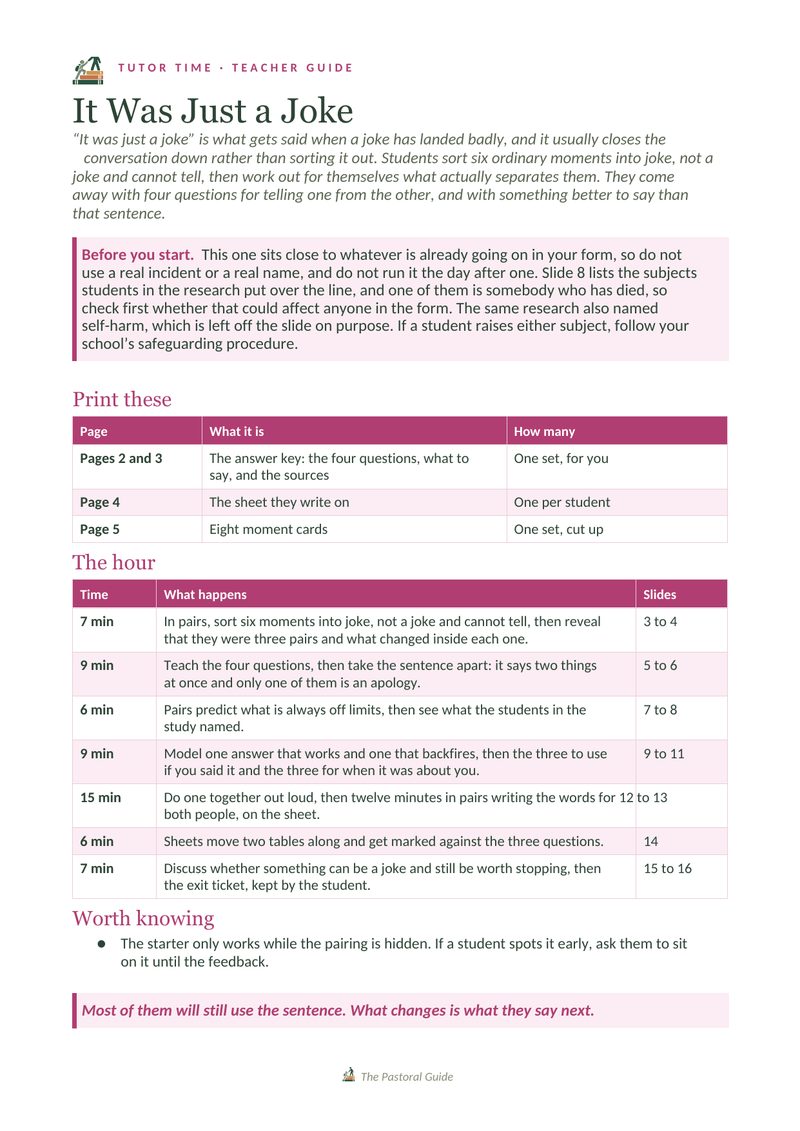
There are four pages to print: two for you, the sheet students write on, and one set of eight moment cards. None of the cards name anybody, so you can hand them out as they are.
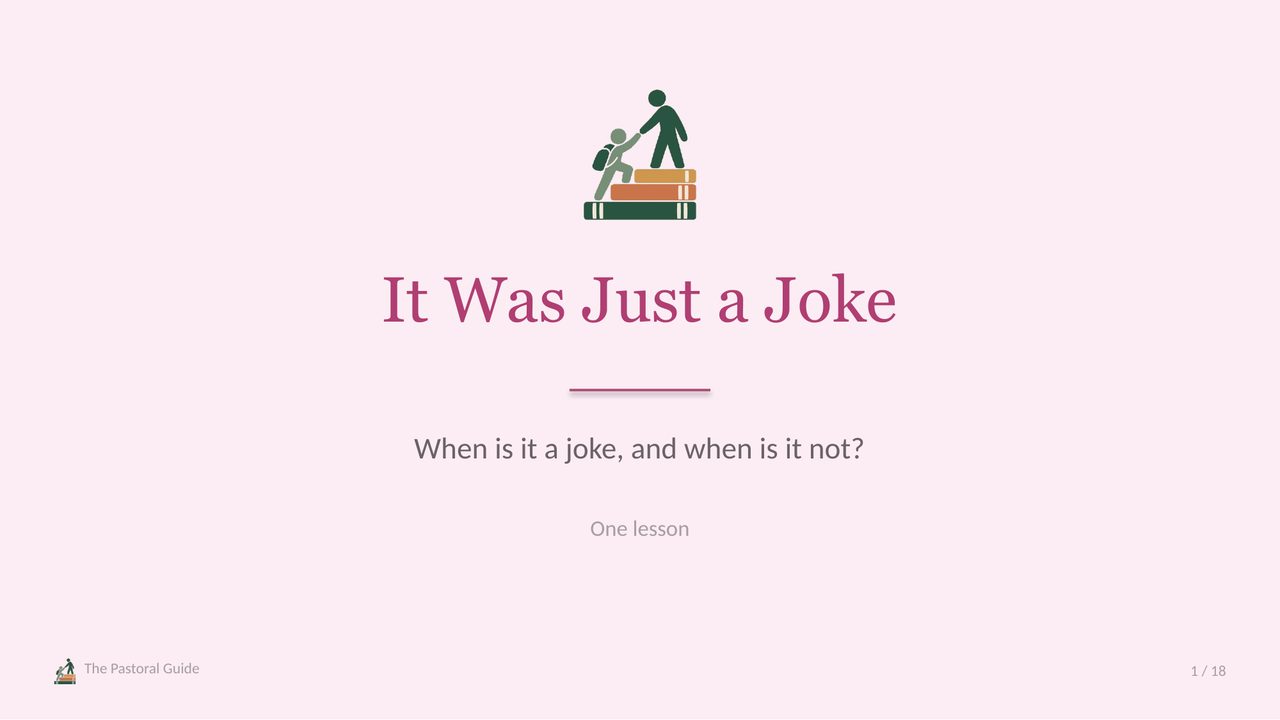
The lesson slides
Eighteen slides: the six moments to sort, the three pairs, the four questions, what the sentence is doing, the words to use instead, the marking round and the exit ticket.
Download Printable PDFTeacher resource pack
Five pages: the hour with timings against the slides, the answer key in two parts, the sheet they write on, and eight moment cards.
DownloadNew resources are added as they are made. Leave your email and you will get one email each time something new goes up, and nothing else.
Thank you. A confirmation email is on its way to you, and once you click the link in it, you will be on the list.
Sorry, that did not go through. Please try again, or email thepastoralguide@gmail.com and I will add you by hand.
There are no newsletters, and your address is never shared. How your details are handled.
This is free to download, the same as everything else here. If it saved you some prep time, you’re welcome to leave something toward the site’s running costs.
Support the site