How it works
The three rules the sheet runs on
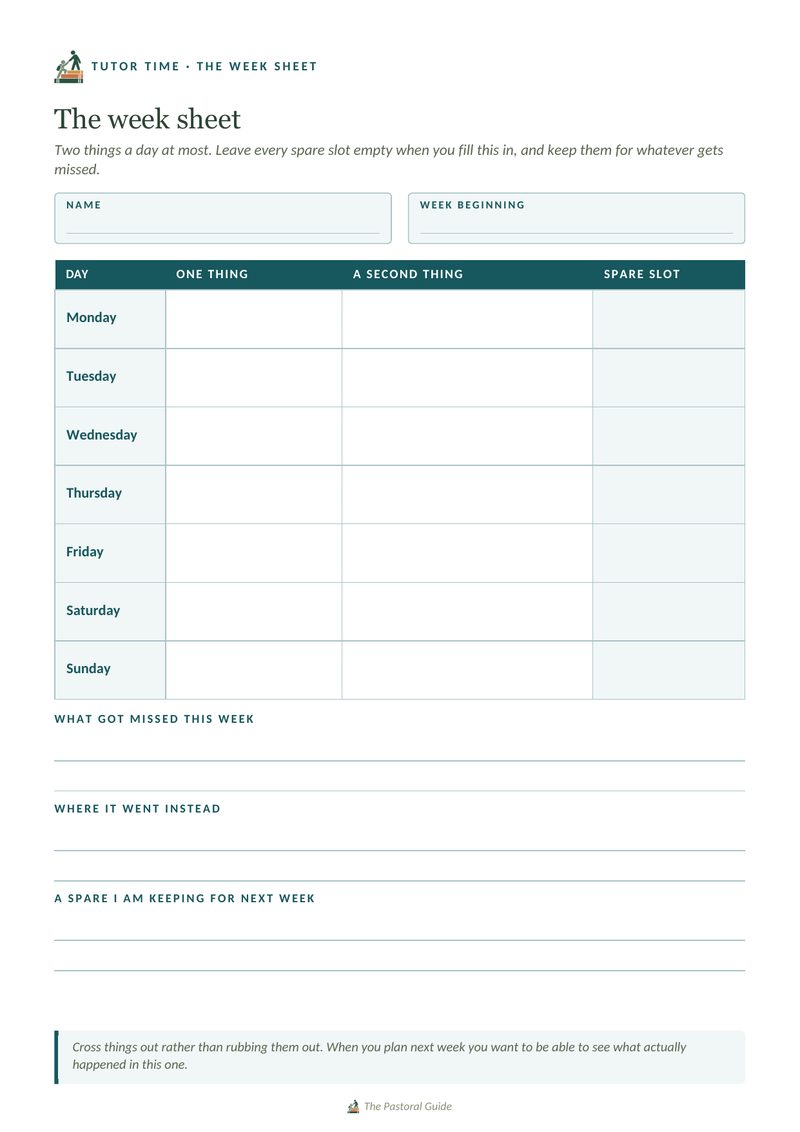
Two things a day, at most
Each one should be small enough to finish in one sitting, rather than a whole subject or a number of hours.
Every spare slot stays empty
Nothing goes in a spare slot on the day the sheet is filled in, because the spares are there for missed sessions.
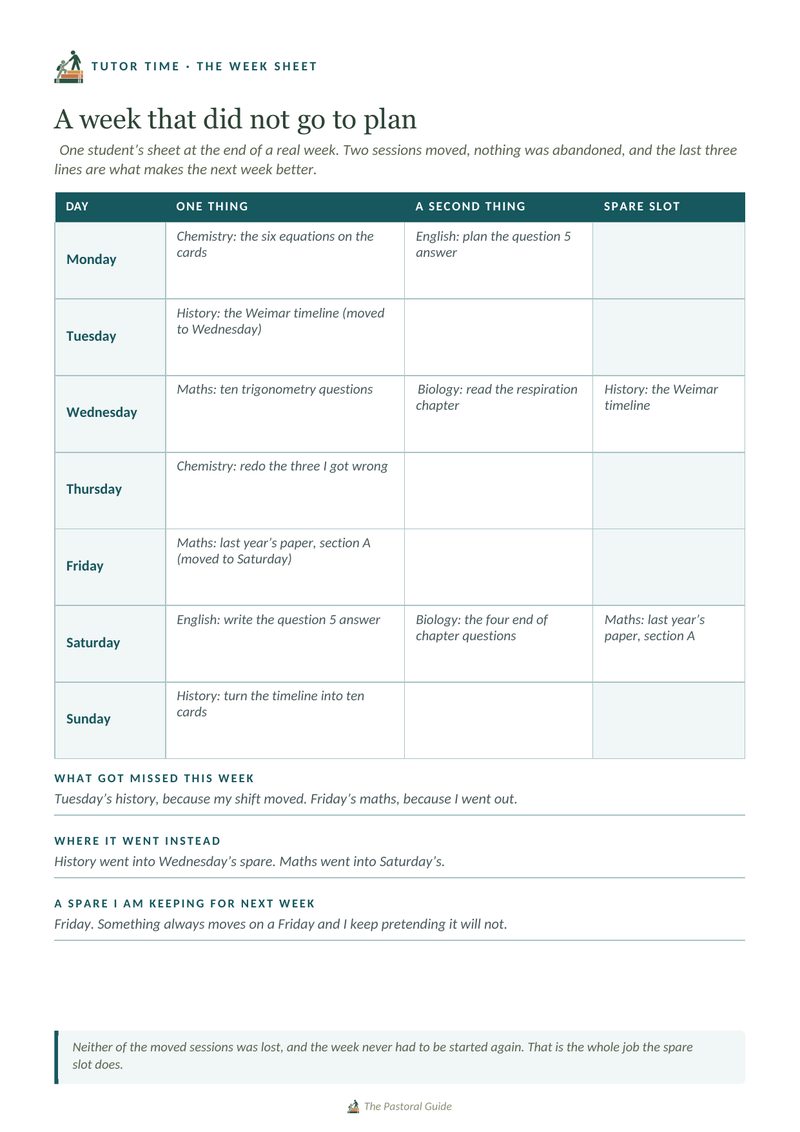
Cross out, do not rub out
The crossings out are what tell you which day to plan less on next week.
Nobody marks the sheet and nobody collects it in. Students write a more honest plan when they know it won’t be checked.
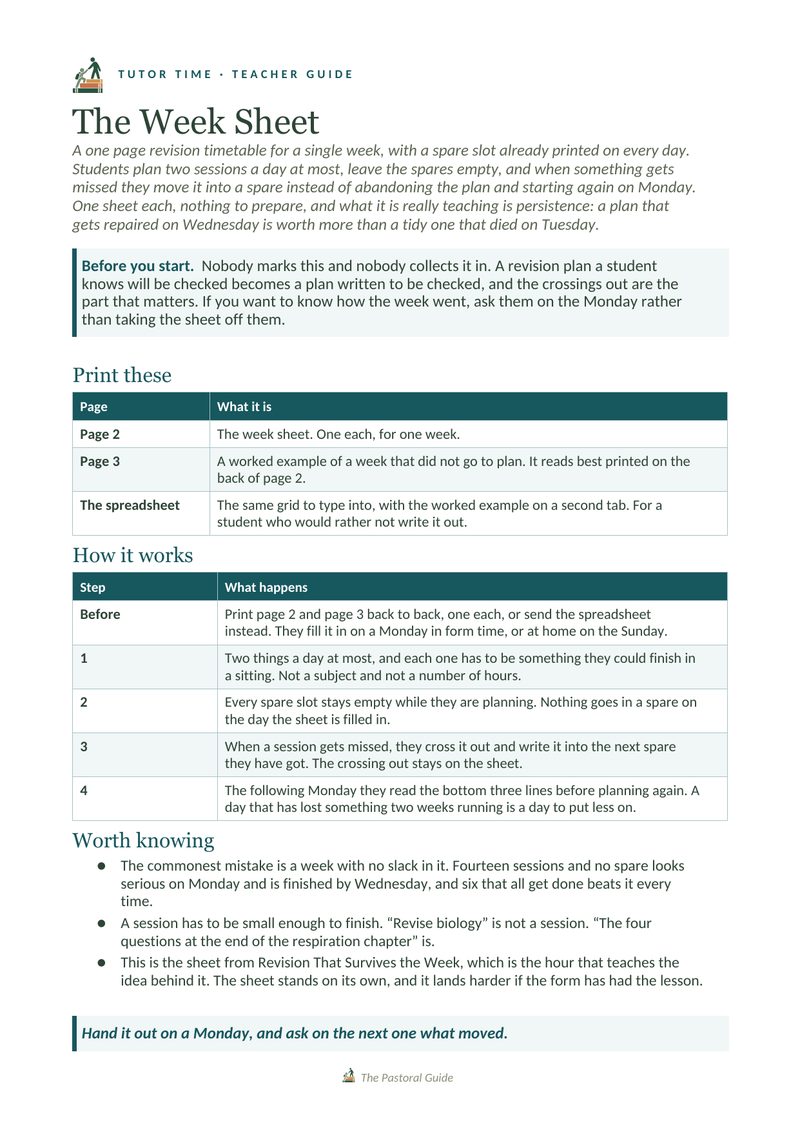
Students plan two sessions a day at most, and each one should be something they could finish. The sheet has room for fourteen sessions, but most students should be writing six or seven.
During the week things will go wrong, such as a shift moving, someone being ill, or Friday just getting away from them. When that happens, the missed session gets crossed out and written into the next spare slot, and the crossing out stays on the sheet.
Students then fill in three lines: what got missed, where it went, and which day to keep a spare for next time. If the same day has lost a session two weeks running, they should plan less on that day.
Most schools hand out a blank revision grid in Year 11, and students often give up on it the first time a week does not go to plan. This sheet has spare slots built in, so moving a missed session is part of the plan. To teach the idea first, Revision That Survives the Week is an hour of tutor time in which students plan a week and then repair it.
A look inside
Get the resource
Print page 2 and page 3 back to back and hand out one each on a Monday, or send the spreadsheet to anybody who would rather type it. Either way, on the following Monday, ask students which sessions moved.
Teacher resource pack
Three pages: a one page teacher guide, the week sheet, and a worked example of a week that did not go to plan.
Download ExcelThe spreadsheet
The same sheet as a spreadsheet, for students who prefer to type. One tab to fill in, one holding the worked example, and a line that counts how many sessions have gone in.
DownloadNew resources are added as they are made. Leave your email and you will get one email each time something new goes up, and nothing else.
Thank you. A confirmation email is on its way to you, and once you click the link in it, you will be on the list.
Sorry, that did not go through. Please try again, or email thepastoralguide@gmail.com and I will add you by hand.
There are no newsletters, and your address is never shared. How your details are handled.
This is free to download, the same as everything else here. If it saved you some prep time, you’re welcome to leave something toward the site’s running costs.
Support the site