How it works
What one month has to cover
Somewhere to live.
Between a third and half of the money, before anything else is decided.
Bills, food, getting around.
The part you do not get a choice about.
Something saved.
At least a little, or an honest reason why not this month.
Something that is not a bill.
A budget with nothing fun in it is hard to stick to.
The budget sheet has six categories, and every line has to be filled in.
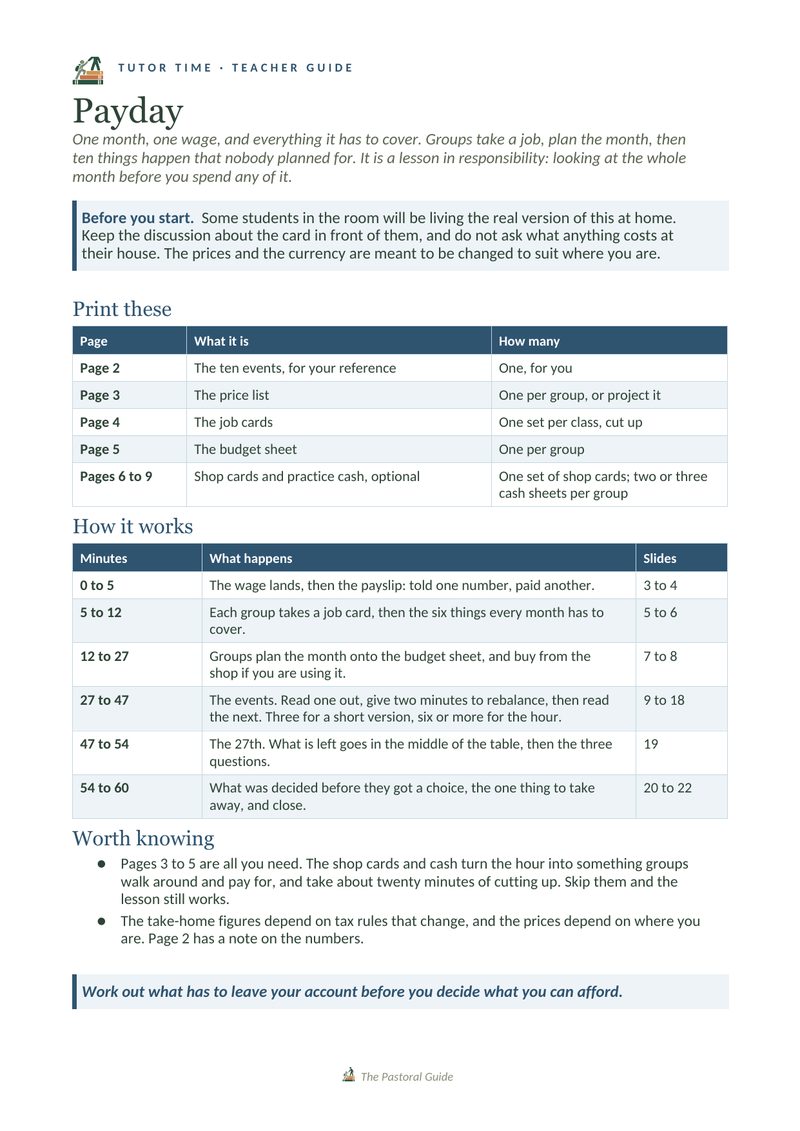
The lesson starts with the wage, and then the payslip. A salary of £24,000 a year sounds like £2,000 a month, but only about £1,730 arrives in your account. For most students, the gap between the two is something they have not come across before.
Each group takes one of six job cards, from an apprentice mechanic on £1,280 a month to a junior developer on £2,400, and each card comes with a complication. For example, the trainee nurse cannot walk to a half-five shift. Because of these complications, the best-paid group does not necessarily get the easiest month.
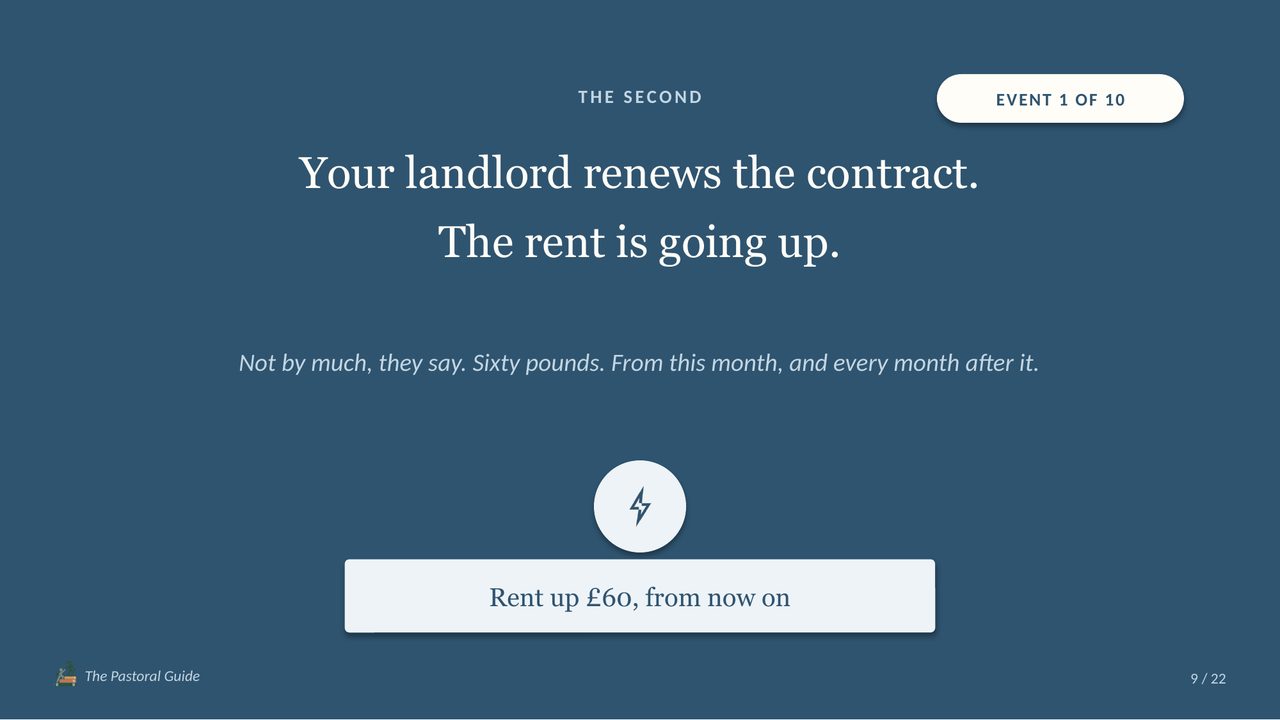
The slides then show ten dated events that happen during the month, such as the hot water going, hours getting cut, or interest turning up on something bought on finance. Read one out, give the groups two minutes to rebalance their budget sheet, and then read the next. Use three events for a short version, or six or more for the full hour.
Some students in the room will have families going through this at home. Keep the discussion focused on the job card in front of them, and do not ask what anything costs at their house.
A look inside
Get the lesson
You only need three pages: the price list, the six job cards and the budget sheet. The shop cards and printable cash are optional. If you use them, groups walk around the room and pay for things, which makes the hour more active. Change the prices and the currency to suit where you are.
The lesson slides
Twenty-two slides that run through the month: the payslip, the job cards, all ten events to read out, and the discussion at the end.
Download Printable PDFTeacher resource pack
Nine pages: timings, an event reference, the price list, job cards, the budget sheet, and optional shop cards and cash.
DownloadNew resources are added as they are made. Leave your email and you will get one email each time something new goes up, and nothing else.
Thank you. A confirmation email is on its way to you, and once you click the link in it, you will be on the list.
Sorry, that did not go through. Please try again, or email thepastoralguide@gmail.com and I will add you by hand.
There are no newsletters, and your address is never shared. How your details are handled.
This is free to download, the same as everything else here. If it saved you some prep time, you’re welcome to leave something toward the site’s running costs.
Support the site