How it works
The four things a snack needs to get you to lunch
Protein.
Slows how fast the stomach empties, so glucose arrives gradually.
Fibre.
Slows the food down in your gut, so the glucose takes longer to arrive.
A slow carb.
Oats, wholegrain or whole fruit, rather than anything white or sugary.
Healthy fats.
Slows the stomach down, and carries the most energy per gram.
The class writes these four down in lesson one and uses them to judge everything in the next two.
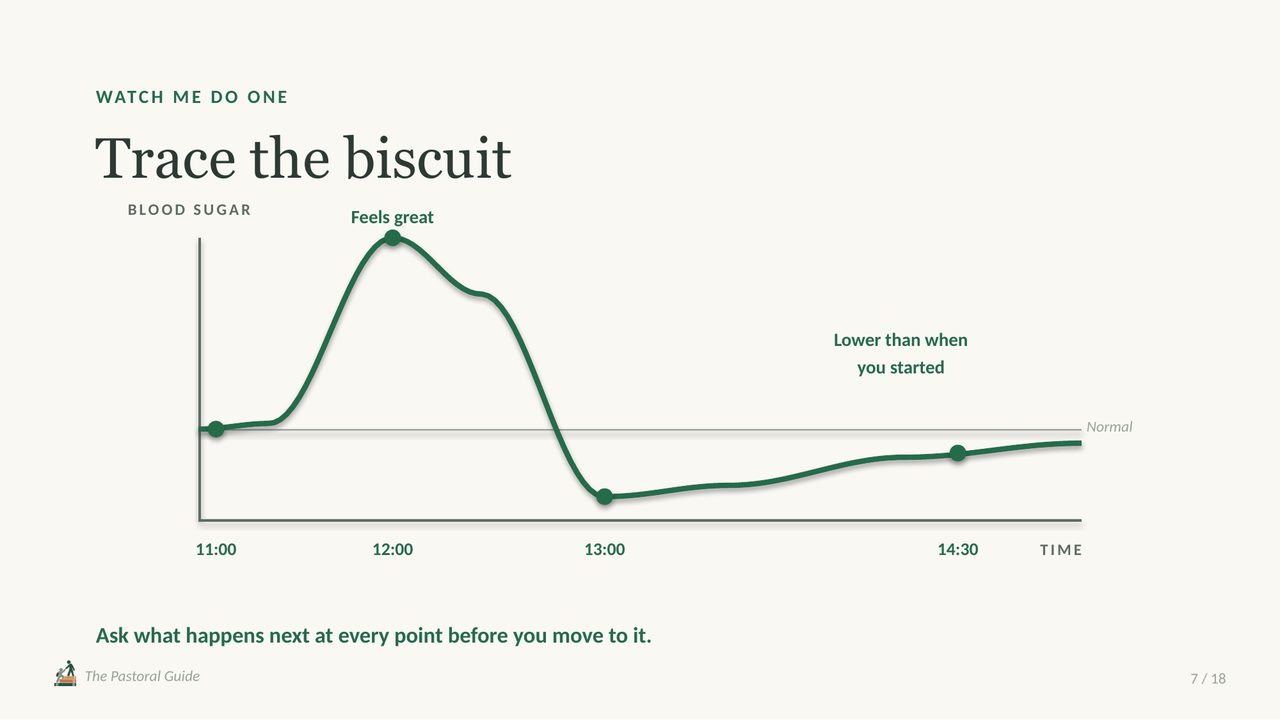
In lesson one, pairs rank six snacks by how long each one would keep them going, and they usually disagree. The slides then explain the science behind it. The brain runs on glucose, and it only has whatever your last meal gave you. The class follows a biscuit across a blood sugar graph, writes the four criteria in their own words, and then ranks the same six snacks again using the food labels.
In lesson two, students make pinwheel wraps, oat and seed balls, or fruit and yoghurt pots. None of them need heat, sharp knives or nuts, and every ingredient has a swap listed for gluten-free, dairy-free and vegan students. The ingredients come out of a school budget, so no student is out of pocket. Before anyone eats, each pair says which ingredient does each of the four jobs.
The homework is to write a recipe card rather than cook a snack, so a student without a kitchen at home can still arrive with the work done. In lesson three, the class marks one card together, then the cards pass two tables along and are scored out of four. The lesson ends by going back to the ranking students made in lesson one.
Nothing in this series is about weight, body shape or calories, and the slides say so to the class in plain words: nobody is scoring them, and nobody is scoring their lunchbox. In most tutor groups there is at least one student who is struggling with food, and a nutrition lesson framed the wrong way can cause them harm, so this series stays on energy and concentration from start to finish.
A look inside
Get the lesson
Lesson 1 slides
Eighteen slides on why you crash at two o’clock, with a blood sugar graph and a label-reading activity.
Download PowerPointLesson 2 slides
Seventeen slides: a method slide for each snack, a clear-up prompt, and their own snack drawn against the biscuit on the same graph.
Download PowerPointLesson 3 slides
Fifteen slides: marking each other’s recipe cards, then tasting or pitching depending on your school rules, and the class recipe collection.
Download Printable PDFTeacher resource pack
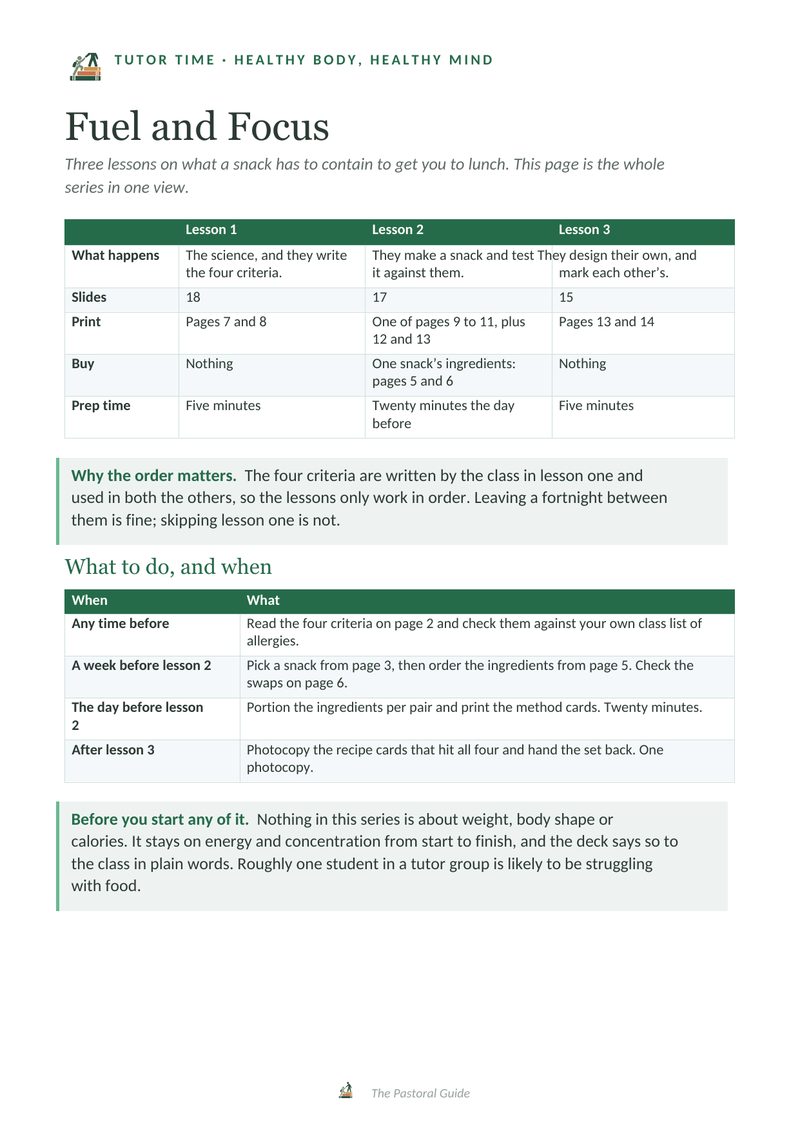
Fourteen pages: the whole series on page one, then a guide for each lesson, the shopping lists, method cards, sheets and slips.
DownloadNew resources are added as they are made. Leave your email and you will get one email each time something new goes up, and nothing else.
Thank you. A confirmation email is on its way to you, and once you click the link in it, you will be on the list.
Sorry, that did not go through. Please try again, or email thepastoralguide@gmail.com and I will add you by hand.
There are no newsletters, and your address is never shared. How your details are handled.
This is free to download, the same as everything else here. If it saved you some prep time, you’re welcome to leave something toward the site’s running costs.
Support the site