How it works
The five lessons in Volume One, and the claim each one tests
Who Paid for the Science?
Sugar is not a problem for your heart. Fat is.
Complete Safety
If a medicine is sold by a big company and prescribed by doctors, it must have been tested properly.
Doctors’ Orders
If doctors smoke them, cigarettes can’t be that bad for you.
No Real Evidence
If nobody has proved something is harmful, it must be safe.
It’s All Vegetable
A new food made in a factory by scientists is probably better for you than the old one.
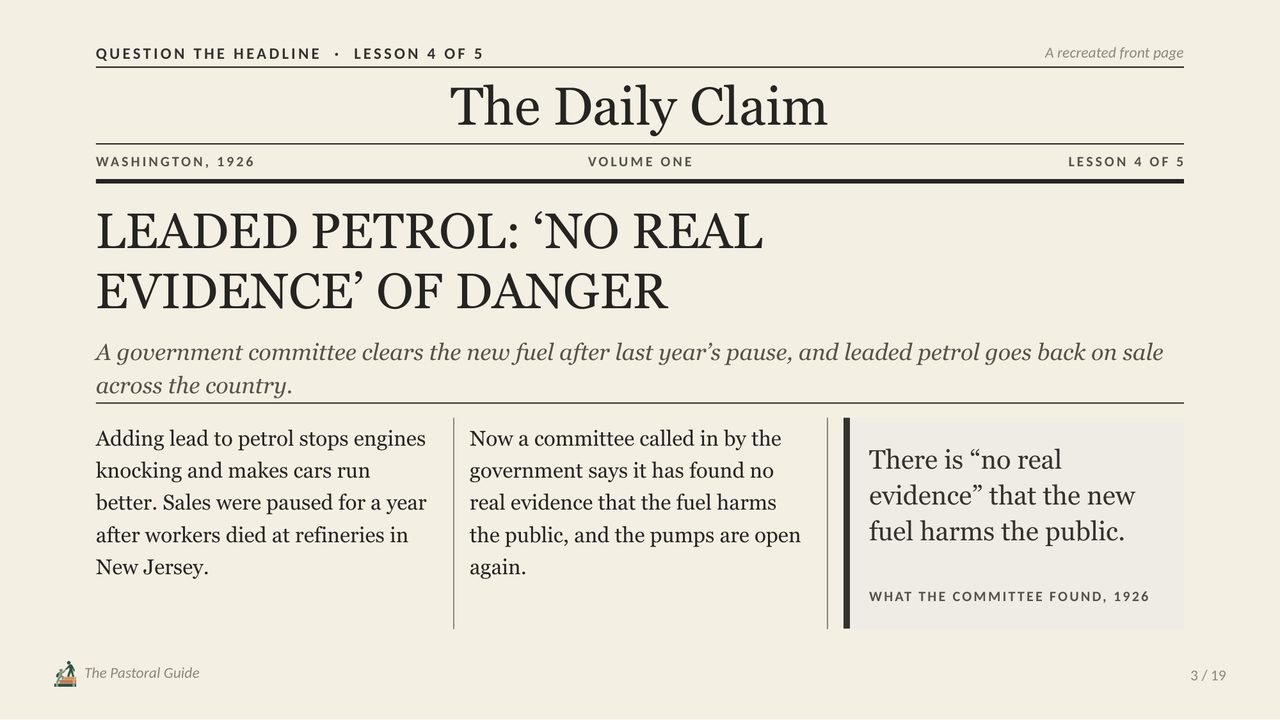
Each lesson starts with a recreated front page showing a claim that was once printed as true. Everybody stands on a line from 0 to 10 to show how much they believe it. If you would rather start with ten minutes in registration, Busted covers the same kind of claim in ten minutes a morning for a week.
Students then use five questions: who is saying it, who gains, who paid, what is the evidence, and has it been tested. The same five questions are used in every lesson, and each table gets them on a card.
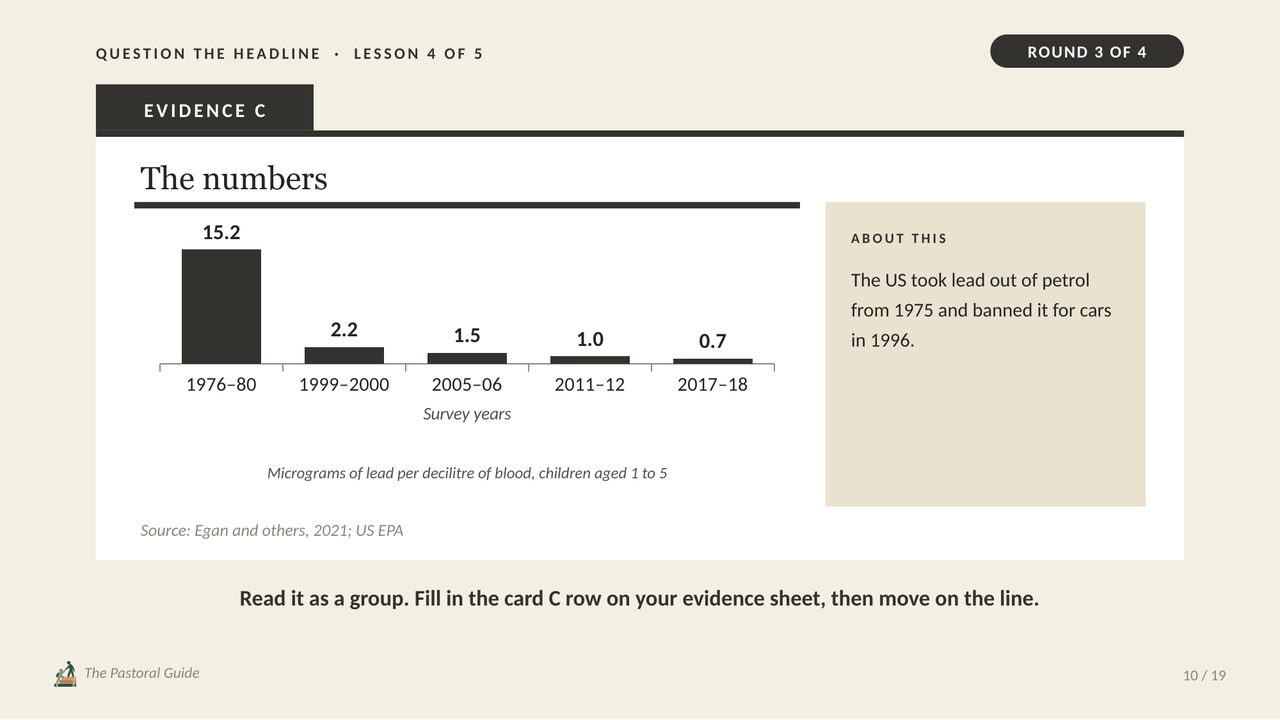
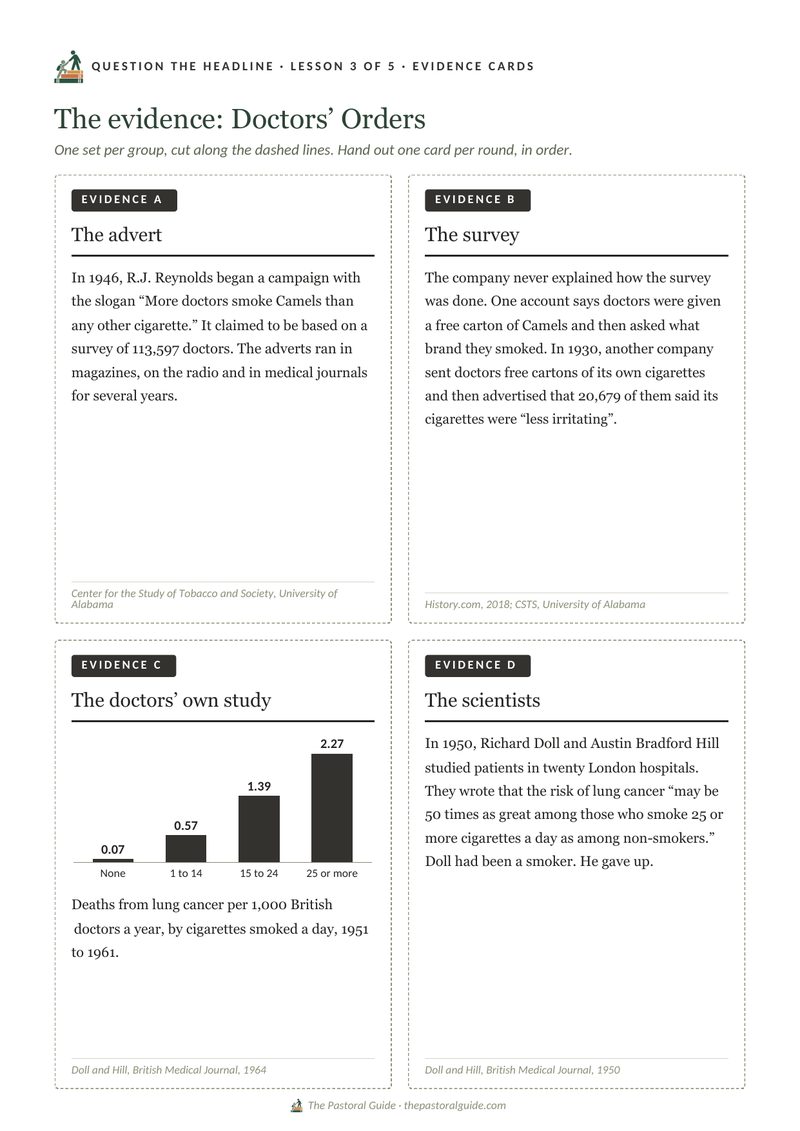
Groups are then given evidence cards one at a time, such as an advert, a document, a graph or a scientist. Every student logs each card on their own evidence sheet, says which question it answers, and moves along the line if their view changes.
The graph card comes with three questions for students to work out, from how many times higher one bar is to what percentage something fell. Once groups have had a go, you show the answers.
To finish, each student or pair writes the front page the paper should have printed, using at least two cards and one number. Somebody from another group marks it, and only after that do you reveal the verdict.
Lesson 2 is about thalidomide and lesson 3 about smoking. The pack asks you to keep the discussion on the claims and the evidence, and never to ask about students’ homes. There are no photographs. Lessons 1 and 5 are about how food was sold, not about what anybody should eat. Every quote and every number on a card is real, and each lesson’s teacher page lists its sources.
A look inside
Get the lessons
For each lesson: one set of evidence cards per group, and an evidence sheet and a front page sheet for each student. Each lesson runs 45 minutes to an hour and stands alone, so run them in any order. Want to know when Volume Two goes up? Sign up here.
Lesson 1: Who Paid for the Science?
Sugar is not a problem for your heart. Fat is.
Download PowerPointLesson 2: Complete Safety
If a medicine is sold by a big company and prescribed by doctors, it must have been tested properly.
Download PowerPointLesson 3: Doctors’ Orders
If doctors smoke them, cigarettes can’t be that bad for you.
Download PowerPointLesson 4: No Real Evidence
If nobody has proved something is harmful, it must be safe.
Download PowerPointLesson 5: It’s All Vegetable
A new food made in a factory by scientists is probably better for you than the old one.
Download Printable PDFTeacher resource pack
Eighteen pages: the guide, the five questions, the front page sheet, then for each lesson a teacher page, the evidence cards and an evidence sheet.
DownloadNew resources are added as they are made. Leave your email and you will get one email each time something new goes up, and nothing else.
Thank you. A confirmation email is on its way to you, and once you click the link in it, you will be on the list.
Sorry, that did not go through. Please try again, or email thepastoralguide@gmail.com and I will add you by hand.
There are no newsletters, and your address is never shared. How your details are handled.
This is free to download, the same as everything else here. If it saved you some prep time, you’re welcome to leave something toward the site’s running costs.
Support the site