How it works
Five tutor times, fifteen minutes each
Week one
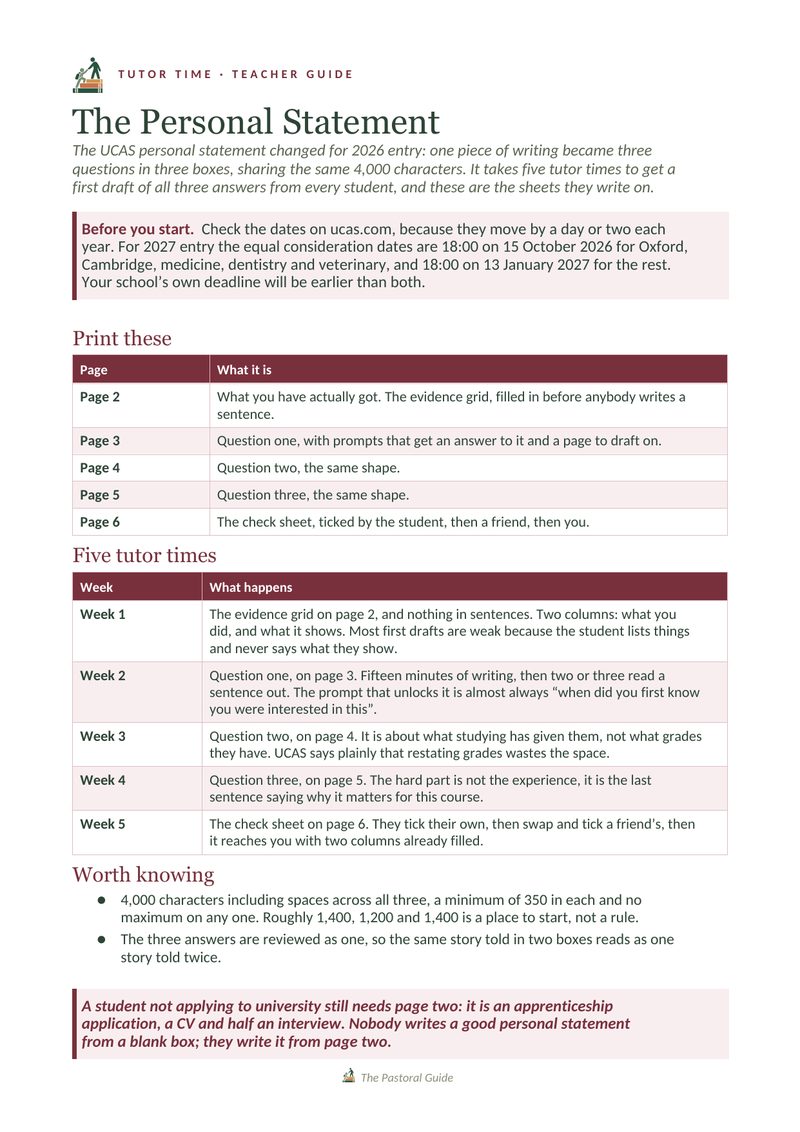
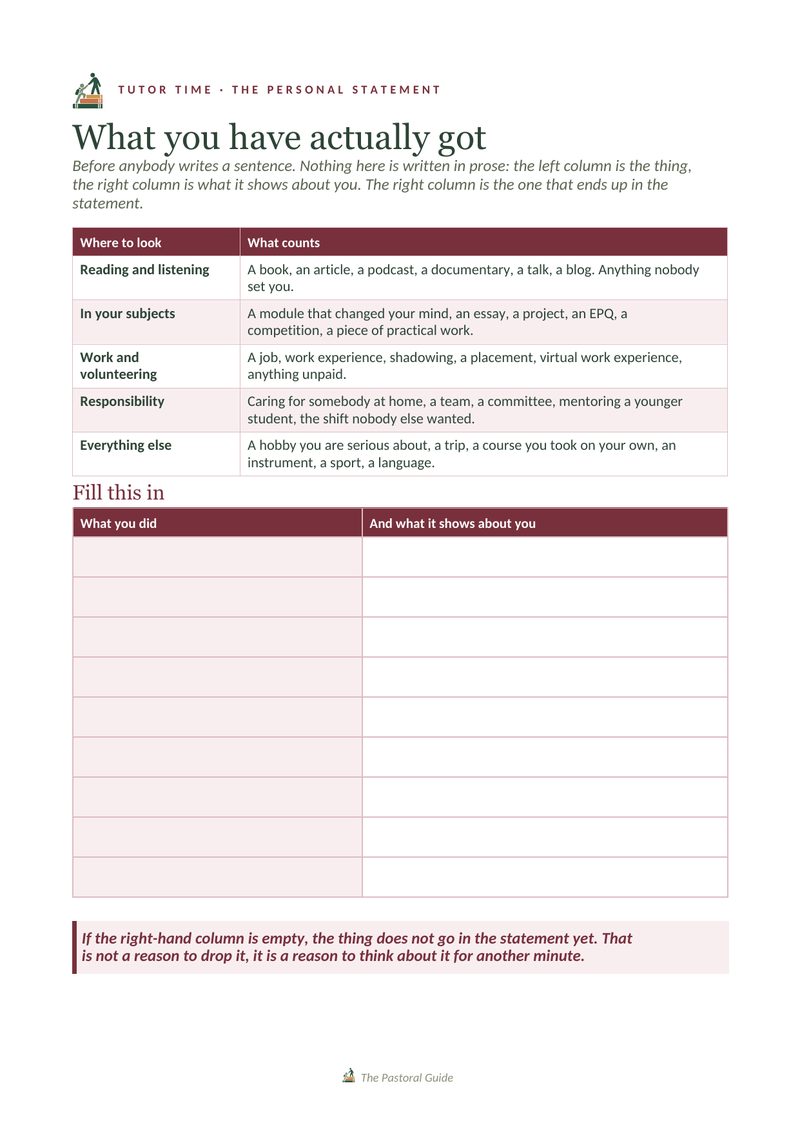
Students fill in the evidence grid, which has two columns: what you did, and what it shows. It is the second column that ends up in the statement.
Week two
Question one has its own page, with four prompts and then fifteen minutes of writing.
Weeks three and four
Questions two and three get a page each. Question two is about what their studies taught them, rather than their grades.
Week five
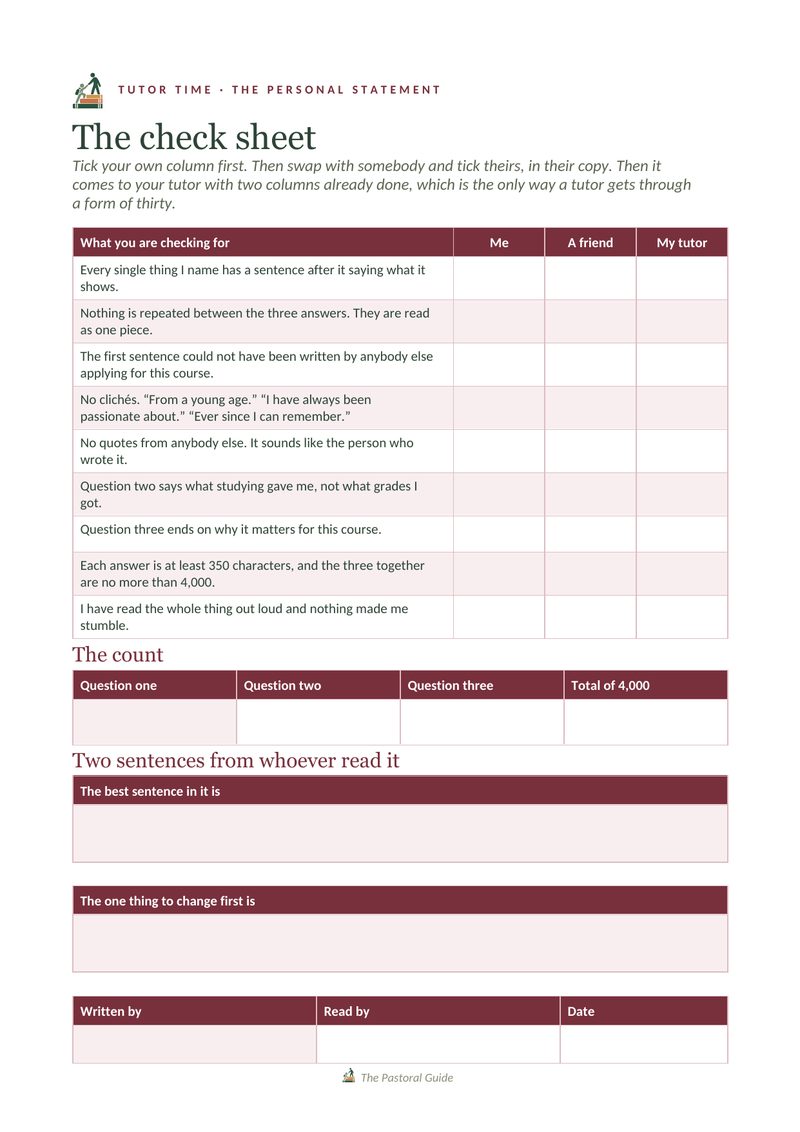
Students use the check sheet on their own draft, then on a friend’s, so it reaches you with two columns already filled in.
If you have one longer slot instead, run it as a single session in the same order.
“Why do you want to study this course or subject?” · “How have your qualifications and studies helped you to prepare for this course or subject?” · “What else have you done to prepare outside of education, and why are these experiences useful?” The three boxes share 4,000 characters, including spaces. Each needs at least 350, and there is no maximum for any one box.
Students write their answers using their evidence grid. Most weak first drafts list things without saying what any of them show, and the grid gets students into the habit of explaining from week one.
A common problem is telling the same story in two boxes, which wastes characters. The check sheet helps students spot this, and a friend fills in one of its columns.
Check the dates on ucas.com before you plan the five weeks, because they move by a day or two each year. For 2027 entry, applications can be sent from 1 September 2026, and the equal consideration dates are 18:00 on 15 October 2026 for Oxford, Cambridge, medicine, dentistry and veterinary courses, and 18:00 on 13 January 2027 for everything else. Your school’s own deadline will be earlier than both.
A look inside
Get the resource
Print pages two to six once per student, and page one once for you.
Teacher resource pack
Six pages: the teacher guide with the five weeks and the dates, the evidence grid, a page for each of the three questions, and the check sheet.
DownloadNew resources are added as they are made. Leave your email and you will get one email each time something new goes up, and nothing else.
Thank you. A confirmation email is on its way to you, and once you click the link in it, you will be on the list.
Sorry, that did not go through. Please try again, or email thepastoralguide@gmail.com and I will add you by hand.
There are no newsletters, and your address is never shared. How your details are handled.
This is free to download, the same as everything else here. If it saved you some prep time, you’re welcome to leave something toward the site’s running costs.
Support the site