How it works
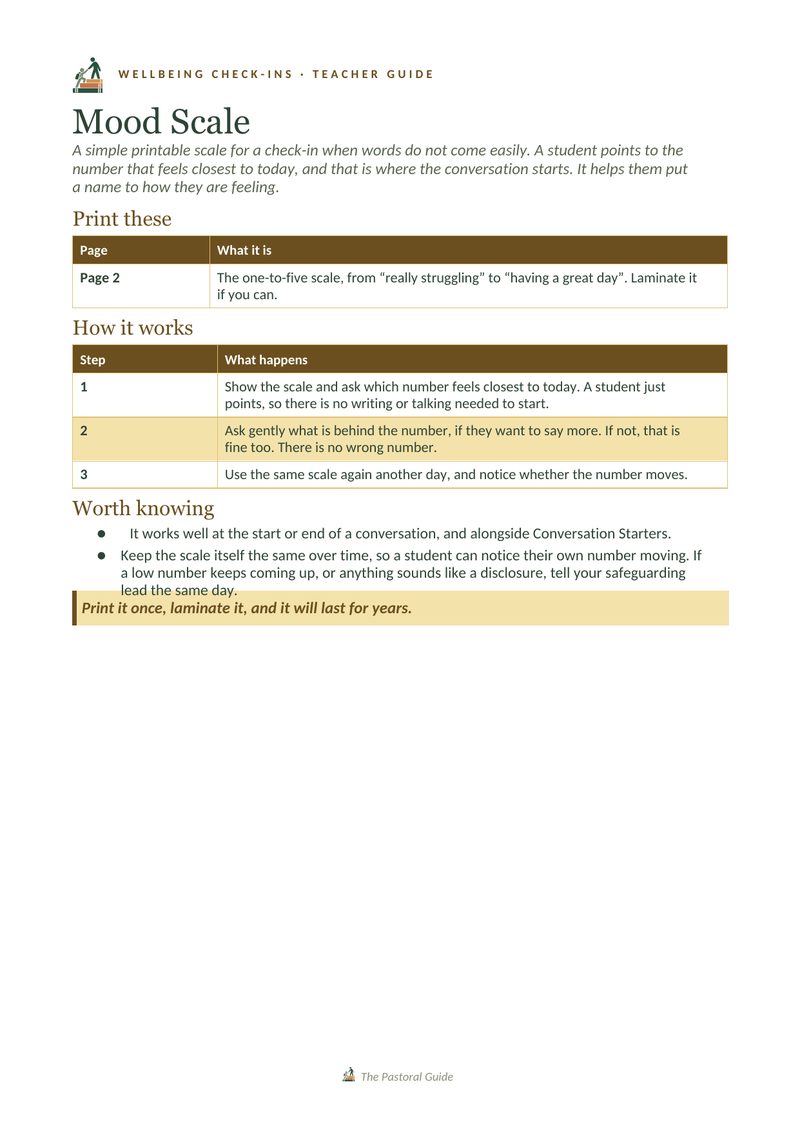
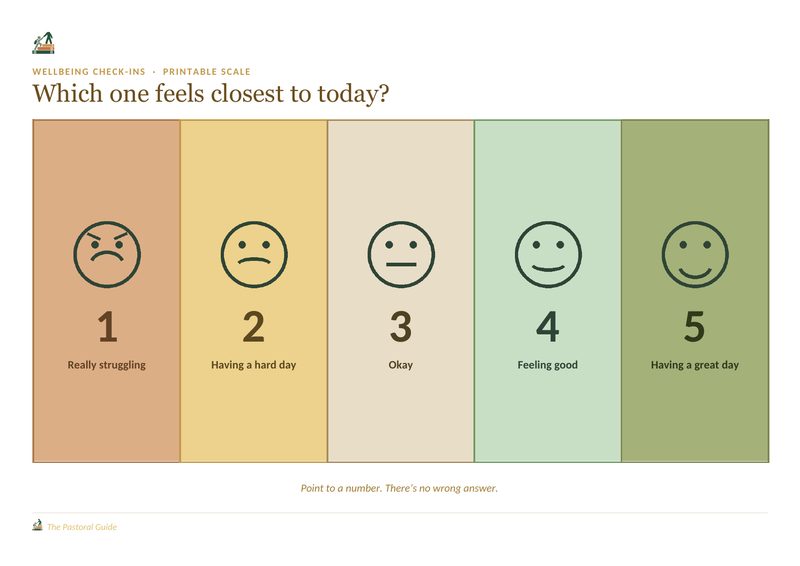
Ask which number feels closest to today. A student just points, so there’s no writing or talking needed to start.
If they want to say more, ask gently what’s behind the number. If they don’t, that’s okay too, and there’s no wrong number to pick. If the student is happy to keep talking, Conversation Starters has twenty-four prompt cards for a longer check-in.
On another day, use the same scale again and notice whether the number has moved.
The number is only the start of the check-in. Accept the answer without arguing with it, and if they want to say more, ask what would move it up by one rather than what is wrong. Using the scale regularly helps you notice when a student’s usual number starts to drop. If a student picks a one or a two more than once, or the number does not match how they seem, that is the time to speak to your head of year, and anything that sounds like a disclosure goes to your designated safeguarding lead the same day.
A look inside
Get the activity
Print it once and laminate it, and it will last for years. It works well alongside Conversation Starters, or on its own.
Teacher resource pack
A one-page teacher guide, plus the printable one-to-five mood scale, ready to print and laminate.
DownloadNew resources are added as they are made. Leave your email and you will get one email each time something new goes up, and nothing else.
Thank you. A confirmation email is on its way to you, and once you click the link in it, you will be on the list.
Sorry, that did not go through. Please try again, or email thepastoralguide@gmail.com and I will add you by hand.
There are no newsletters, and your address is never shared. How your details are handled.
This is free to download, the same as everything else here. If it saved you some prep time, you’re welcome to leave something toward the site’s running costs.
Support the site